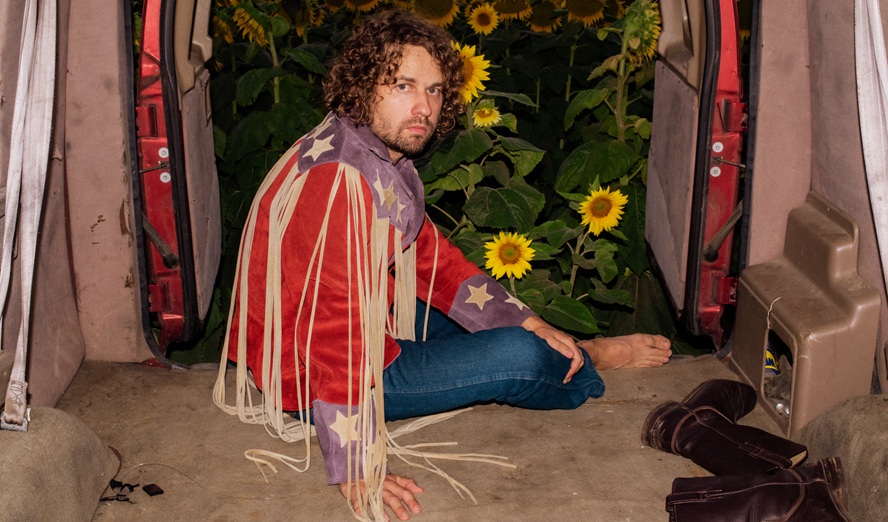
Kevin Morby ist aktuell einer der renommiertesten Songwriter, nicht nur in der Americana-Szene. Immer wieder nennt man ihn »Dylanesque« und auch wenn dieses Adjektiv selten korrekt verwendet wird, in diesem Fall stimmt es. Morby wurde 1988 in Texas geboren und wuchs in Kansas City, Missouri auf. Als junger Erwachsener zog er nach Brooklyn, um Musiker zu werden. Er begann als Bassist der Band Woods und gründete gemeinsam mit Cassie Ramone von Vivian Girls die Band The Babies. 2013 erschien sein erstes Soloalbum »Harlem River«, das schnell Beachtung fand. Wirklich bekannt wurde Morby 2016 mit dem Song »Beautiful Stranger«, einer Reaktion auf die Terroranschläge in Paris am 13. November 2015. Es folgten vier weitere Alben, bis 2020 »Sundowner« erschien, der Start seiner Trilogie über den mittleren Westen der USA. Morby zog nach ein paar Jahren in L.A. wieder zurück nach Kansas City, nachdem ihm ein Freund geraten hatte, ein Haus in seiner alten Heimat kaufen. »Sundowner« ist ein sehr warmes, melancholisches, reduziertes Album, in dem Morby das entschleunigte, minimalistische Leben im Midwest hochhält, vor allem im Kontrast zu Los Angeles und New York. Auch die Musik geht deutlicher in die Americana-Richtung. Morby spielte fast alle Instrumente selbst und schrieb alle Tracks in E-Dur. 2022 folgte Teil zwei der Trilogie, »This Is A Photograph«. In diesem Album verarbeitet Morby Kindheitserinnerungen aus seiner Zeit in Kansas und generell Geschichten aus dem Mittleren Westen. Die Musik wird wieder dynamischer, heller und weniger melancholisch. In der Gegenwart angekommen, veröffentlicht Morby 2026 den letzten Teil, »A Little Wide Open«. Der Künstler selbst ordnet die Alben wie folgt ein und erklärt den Titel.
skug: You call »Sundowner«, »This Is a Photograph« and »A Little Wide Open« your »trilogy of the Midwest«. I always imagined »Sundowner« as being nighttime, »This Is a Photograph« feels like noon, and now, »A Little Wide Open« comes across as afternoon. How do you relate these three albums to each other?
Kevin Morby: I like that. It feels about right. I think of »Sundowner« as me driving into the Midwest, »This Is a Photograph« like I’m going as deep into Middle America as possible, and with »A Little Wide Open«, I see myself starting to drive back out of it.
How would you describe the Midwest to someone from Europe? And what does »A Little Wide Open« mean as a saying or phrase?
I would say the Midwest is a lot of open spaces, a lot of big skies, and a lot of thunderstorms. Vast, wide-open skies and landscapes that can feel both freeing and also claustrophobic. »A Little Wide Open« sort of speaks to the fact that a lot of Americans, those who live on the coast, sort of overlook the middle of America. It’s also meant to hint at the fact that this album is very vulnerable for me as a writer, and I felt very exposed and »wide open« while writing it.
»A Little Wide Open« wurde von einem der zurzeit angesagtesten Produzenten begleitet: Aaron Dessner. Der Gitarrist der Band The National produzierte unter anderem die letzten Alben von Taylor Swift, Gracie Abrams, Ed Sheeran, Mumford & Sons und Noah Kahan. Die Musik ist deutlich einheitlicher und selbstbewusster. Sie nimmt Platz ein und füllt diesen behutsam. Zudem finden sich viele Kollaborateur*innen auf dem Album, z. B. Justin Vernon von Bon Iver, Amelia Meath von Sylvan Esso oder Lucinda Williams.
On »Sundowner«, you chose a very isolated approach to production, you even played the drums yourself. This album feels very much like the opposite, there are a lot of collaborators and features, and still you’re calling »A Little Wide Open« your most personal record to date. How is this new approach helping you to write more personal music? (I imagine Aaron Dessner being a big influence here, Justin Vernon once called him »the great connector«.)
I think in the past, I was often singing from a lot of different vantage points that weren’t mine. I’d come up with characters or sing about politics, etc. But on this album, for whatever reason, I found myself writing almost solely from my point of view. Aaron was very encouraging of this and helped make sure that sonically we didn’t crowd my lyrics and what I was trying to convey to the listener.
Was auf dieser Veröffentlichung besonders gut gelungen ist, ist der rote Faden, der sich durch die Songs zieht. Die ersten sechs Songs klingen nach Stadtleben (wenn auch nicht nach Großstädten wie New York oder L.A.), insbesondere »Javelin«, ein für Kevin Morby typischer, rastloser Good-Vibes-Track. »Back in town, all by myself / I should go dancing, take my boots off the shelf / Don’t be concerned, babe, at least not yet / I am still happy to be breathing in«. Je weiter sich die Tracklist der Mitte des Albums und dem Titelsong nähert, desto mehr macht die Musik auf, verlangsamt sich und wird, tatsächlich, geöffneter. Da ist z. B. »Natural Disaster«, ein Song, in dem die unvermeidbaren negativen Dinge im Leben besungen und mit Naturkatastrophen verglichen werden. Am Ende ist es das aber alles wert, der Liebe wegen. Das können die sich wiederholenden Lyrics »Come to me, baby, come to me now« und ein 2-minütiges Gitarrensolo hervorragend ausdrücken. Dann ist da noch »100,000«, ein von Mandolinenspiel getragener Track, der auch die aktuelle Politik und deren Auswirkungen in den USA zart und empathisch beobachtet und kommentiert.
When I started getting into your music, I began to romanticize the USA and the Midwest in particular. There is a lot of nostalgia for a place I’ve never been to. With what’s going on in politics right now, it is confusing to feel like this about the USA. How do you deal with these mixed emotions regarding your home?
No matter how bad politics get in America, I always try and be the best version of myself possible. In a lot of ways, the worse things get, the more I want to be creative and try to spread art and being creative. That said, it is very complicated right now, and I try to be the best representation of an American that I can be.
One very satisfying thing in some of your songs is the signature »Morby scream«, for example in »Campfire« or »I Was on Time«. I was very happy to find it on this album as well, on the track »100,000«. What does it mean to you?
Haha, thank you! It’s really just an expression – a way of trying to convey a certain energy I’m feeling within the song. Sometimes it’s an expression of joy, sometimes of sorrow. But always meant to be cathartic.
Another reoccurring line you used a couple of times is »My heart’s the guitar and my mouth the piano.« Is this album more on the guitar or on the piano side?
I would say this is more of a guitar album! Although there are some great piano moments, too.
Und dann, ab der Mitte des Albums, ändert sich mit dem Song »A Little Wide Open« die Stimmung. Wir befinden uns nun definitiv nicht mehr in der Stadt, sondern unter dem »big sky«, irgendwo im Nirgendwo. Der 8-minütige Track bildet das von Morby beschriebene Gefühl von leichter Klaustrophobie, Angst vor der Weite, sowohl emotional als auch landschaftlich, und gleichzeitiger Schönheit, gut ab. Ein weiteres immer wiederkehrendes Thema von Morby wird auch aufgegriffen: Zeit. Immer wieder beschäftigte er sich mit diesem Thema, sei es durch die Aufarbeitung seiner Kindheit auf »This Is a Photograph« oder die Beschäftigung mit dem Tod. Immer wieder besingt Morby verstorbene Freunde auf Songs. Auch sprach er im Vorfeld zu diesem Release immer wieder über eine Geschichte, in der ein Fan auf dem Weg zu einem seiner Konzerte bei einem Verkehrsunfall ums Leben kam. Zeit war für ihn oft mit Trauer und Frust verbunden, etwas, wogegen er sich zu wehren versuchte. Auf diesem Album ist der Ton ein anderer, womöglich auch, weil Kevin Morby mit seiner Partnerin Katie Crutchfield bald ein Kind bekommt. »Time, please be kind to me / Time, we’re not enemies / Though it seems / Time, we share the same dream / To stretch on forever towards eternity«. Noch deutlicher wird dieses Thema im Song »I Ride Passenger«. »Don’t get scared / We’re out here in anywhere, America / And don’t get wise, why? / Cause Time is a violent driver / And I ride passenger«, singt Morby zum Schluss des Songs.
One of the motifs in your music that seems to be present most of the time is death. I feel like you found some acceptance or peace with it on your new record – for example when you say that you accept »to be a passenger of the violent driver time«. If so, what changed for you in your stance regarding this topic?
I think on my last album, I was very combative with time. I kept referring to time as some sort of enemy. With the years since, maybe I’ve matured or grown up a little bit more, but I’ve started to see time as a gift. Not an enemy or something I’m battling, but a companion that I’m on a journey with. To exist in time at all is a privilege.
Und genau diese Haltung ist in den nächsten zwei Songs des Albums spürbar. In »Junebug« steckt so viel Lebensfreude und Optimismus wie wahrscheinlich an keiner anderen Stelle in der Diskographie dieses Künstlers. Eine Harfe spielt das verträumte, süße Hauptthema des Songs, begleitet von zwei Piano-Chords. »Oh, to be a child / Oh, to be alive / Oh, it makes you wander / Oh it makes you smile« sind Zeilen, die man so vor ein paar Jahren wohl nie Morby zugeordnet hätte. Traditionell ist der letzte Song auf dem Album ein Resümee der Themen Morbys und nochmal ein Ausrufezeichen. »Field Guide for the Butterflies« ist da keine Ausnahme. Hier wird direkt auf den bereits erwähnten verstorbenen Fan Bezug genommen. Morby denkt über die toten Schmetterlinge nach, die sich auf seinen musikalischen Roadtrips auf seiner Windschutzscheibe sammeln. Er veröffentlichte auch einen Essay der Autorin Ratchel Kushner, der sehr lesenswert ist. Darin wird Morby zu diesem Song wie folgt zitiert: »›Field Guide for the Butterflies‹ says everything this record’s about, it’s all in there. I was on this drive through Arkansas by myself. I noticed that butterflies kept hitting my truck, as they were trying to cross the highway. I went to Dickson Street Books in Fayetteville, and looked at this book, ›Field Guide to the North American Butterfly‹. It was this moment where I was like, what does it mean that there are butterflies crossing the highway, what do they mean as a symbol? The people who died going to my show, it means that. It means me and Katie meeting on the road and touring together and falling in love. It’s like, we’re floating around. Flying over the highway like we are not butterflies. Like we are not fragile.«
Kevin Morby schafft es wieder, ein absolut brillantes Album aufzunehmen. Irgendwie gelingt es ihm ein weiteres Mal, mit dem Thema Heimat und Midwest seiner Persönlichkeitsentwicklung ein einzigartiges Vehikel zu verleihen. Morby wurde auf »A Little Wide Open« ein gutes Stück besonnener und reifer. Er akzeptiert die Fragilität der großen Emotionen und Ereignisse im Leben, die gleichermaßen bedrohlich wie wunderschön sind. Auch musikalisch passiert mit Unterstützung von Mastermind Aaron Dessner eine Reifung und wird Mut gefasst, gleichzeitig mehr Raum zu lassen und diesen zu nutzen.
Kevin Morby spielt am 17. Juli 2026 ein Konzert in der Wiener Simm City. Ein Tipp: Wenn man in den vorderen Reihen steht, hat man eine gute Chance, eine Blume von Morby zu fangen, die er immer während des Sets ins Publikum wirft.
I am very much looking forward to your concert in Vienna this summer! Last time you played here you visited the film locations of »Before Sunrise«. What do you like about that movie in particular? Are there any standout movies that had an influence on »A Little Wide Open«?
I love that the dialogue is so good you feel like you’re there with them. Not a lot of movies can hold your attention with just two people talking. I was watching a lot of »Mad Max« while working on this album, which seems kind of funny but also makes sense. They’re road trip movies, and this is a road trip album. Also, the movie »Lucky« starring Harry Dean Stanton. Such a great film that inspired my writing.
Link: www.kevinmorby.com