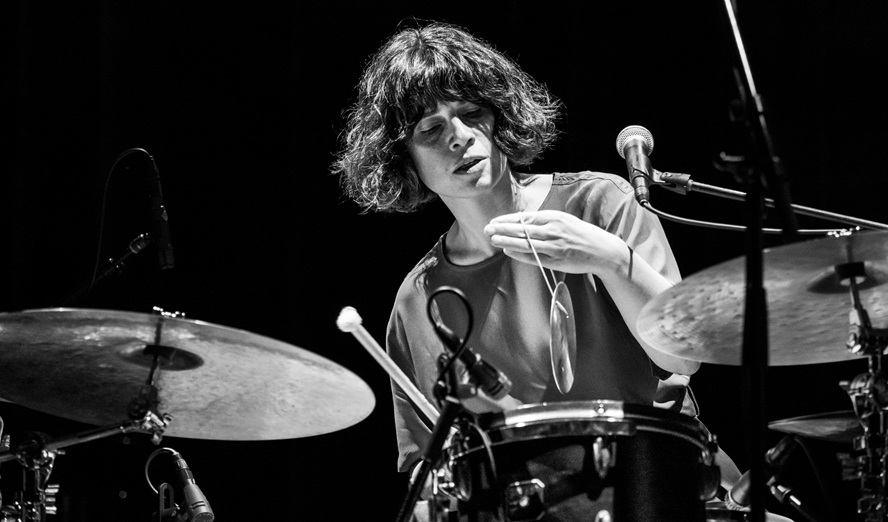
The 2005 album »Yhä hämärää« (»Still Gloomy«), released under the moniker Paavoharju, became a hidden gem probably only the »Pitchfork« generation was aware of and too few people really appreciated the way it deserves. It is a classic of experimental music, consisting of elements ranging from ambient and folk to electronic music and noise, composed in a cut-up-like manner, with lots of melancholy and weird vibes blending into one another, never really becoming too tangible, always meandering through dark but glimmering atmospheres, thus leaving enough space for listeners to settle in and feel at home, creating a little niche for themselves. It is a timeless piece of music, located somewhere in the rural isolation of Finland around Savonlinna, but open to anyone who wants to enter. Lauri Ainala, the person behind the project, has released more music and art since, under different names and going in different directions, he appears not to care too much about recognition from other parts of the world, in terms of music journalism and conventional success. Ainala is deeply rooted in the art scene of his home in the southeast of Finland and working and exploring are simply part of how he lives and what he does – everything else is secondary. His new album as Orpokotijuhlat Saarella (Orphanage Festival at Saari), titled »Profetta heidän seassansa on« (»The Prophet is among them«), deepens those parts of his musical identity that consist of darker ambient and noisy ideas, offering fewer melodies, less singing and fewer elements to hold onto, yet nonetheless speaking a similar musical language. It creates spaces that you can feel at home in, although that home is haunted. Even when it’s dark, and this album is about some pretty dark subjects, the warmth of Ainala’s idiosyncratic phrasing never disappears completely. In the interview he speaks about the background of this project and where it finally artistically brought him to.
skug: It seems to me that Savonlinna is more than just the place you come from. It has been part of your art since the beginning of your output. What makes it special to you?
Lauri Ainala: Savonlinna feels like the only place that’s really home for me. I hardly ever leave, and with so few people around (in terms of small population) and the costs being low, I can do things here I couldn’t anywhere else. It has its own unique atmosphere, and even by global standards, there are really talented people here. It has quietly shaped my life and my art from the very beginning.
Orpokotijuhlat Saarella is only one of your various projects. What does it mean to you?
It is a deep exploration of religious themes and feelings that still linger like demons in my subconscious.
When did the idea to »Profetta heidän seassansa on« arise?
Little by little. At first, I only had the raw recordings that my friend Apostolus Carnis and I made in 2023. Then I began researching the literature on the Uukuniemi religious movement, mainly the book »Eräs meidän ajan profeetta: Helena Konttisen elämä, toiminta ja opetukset« (»A Prophet of Our Time: The Life, Actions, and Teachings of Helena Konttinen«) by K. K. Sarlin.
To someone who doesn’t know anything about it: who was the strange person the project is about? Is she connected to your surroundings, is there a more profound connection to Finnish culture than one might think?
Helena Konttinen was a trance preacher from a small village in Finland in the early 1900s. She wasn’t educated as a preacher, but people said she went into deep trance states and delivered long religious speeches that many found to be powerful. Her followers kept record of what she said and Sarlin published the book after she died in 1916. Her prophecies contain multilayered mythological and magical elements intertwined with local folk beliefs, spiritual visions, and rituals. My paternal grandmother was from the same village as the »prophet«, Mensuvaara, and my relatives have attended the annual Orphanage Festivals ever since they began in 1916. The movement, known as Uukuniemeläisyys, grew around Helena Konttinen’s trance preaching and revivalist teachings in the early 20th century. This movement remains fairly obscure, even in Finland.
And how does this kind of literature resonate with you?
It’s extremely interesting and thought-provoking, as the »prophet« is trying to bring the reader closer to Jesus Christ and his »divine light«, but the bizarre and even horrifying visions do just the opposite. Instead of comfort, there’s tension. Instead of clarity, there’s something feverish. Nightmarish.
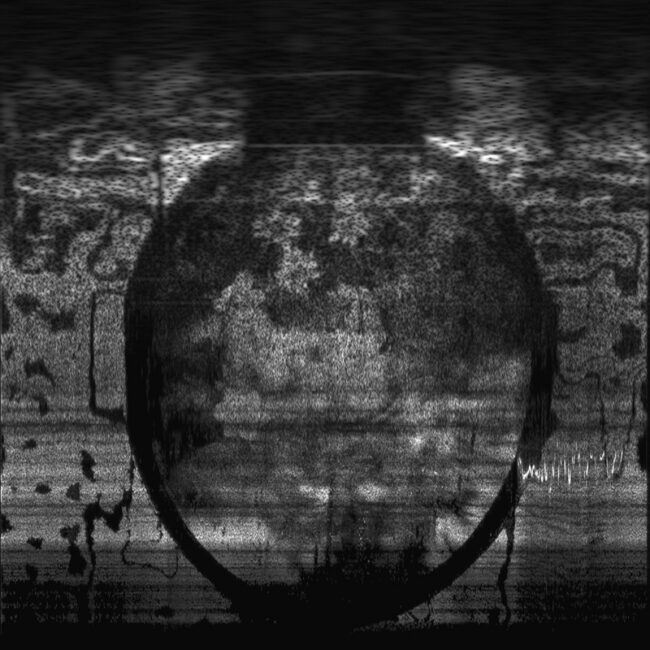
The album comes with an A4 sheet of paper. Written on it is a text collage that you created using the cut-up technique (that we may know from William Burroughs). What does writing mean to you?
I’ve written all kinds of texts – song lyrics for Paavoharju, poems, absurd nonsensical crap, a couple of books, and most recently a script for a graphic novel (together with Sami Makkonen). Writing is really relaxing and enjoyable for me. I like exploring different materials, like religious texts, newspapers, material from the internet etc., and putting together all sorts of interesting things, ideas and perspectives into the framework of a text. I would love to write more scripts – for graphic novels or movies.
From the way you work with the cut-up technique to your compositions: is there a constant in the way you make music? As someone who has followed it since »Yhä hämärää« in 2005, I can imagine, hearing bits and snippets and sounds, that you still draw from a pool of resources. Am I right?
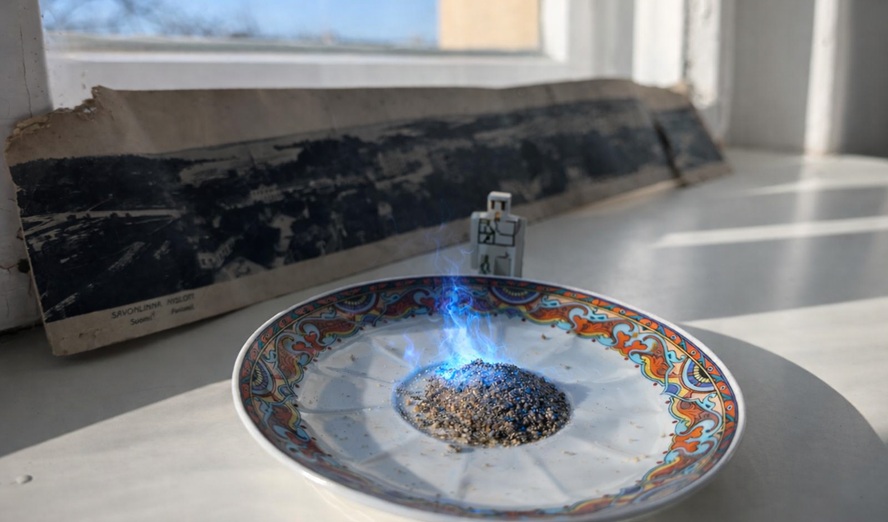
Yes, there’s a clear continuity. I work the same way across texts, videos, music, or experimental structures. I reuse a lot of old material, but I’m always picking up new things too – anything that catches my interest. Exploring, mixing, and shaping it all is what stays constant. One vinyl insert consists of »a small, death-smelling witch bag«.
I threw the contents onto my fully heated stove top and something very strange happened which I can’t speak about openly. Was that intended?
Yes, it’s a hex bag after all.
You told me about a comic book or graphic novel that contains some of these elements. Can you say a few things about that? What can we expect?
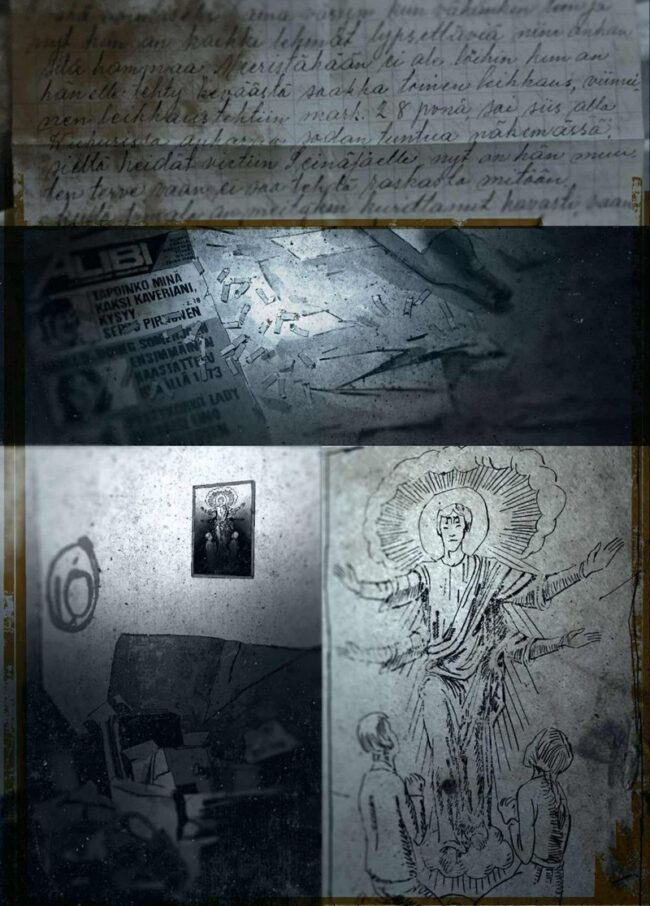
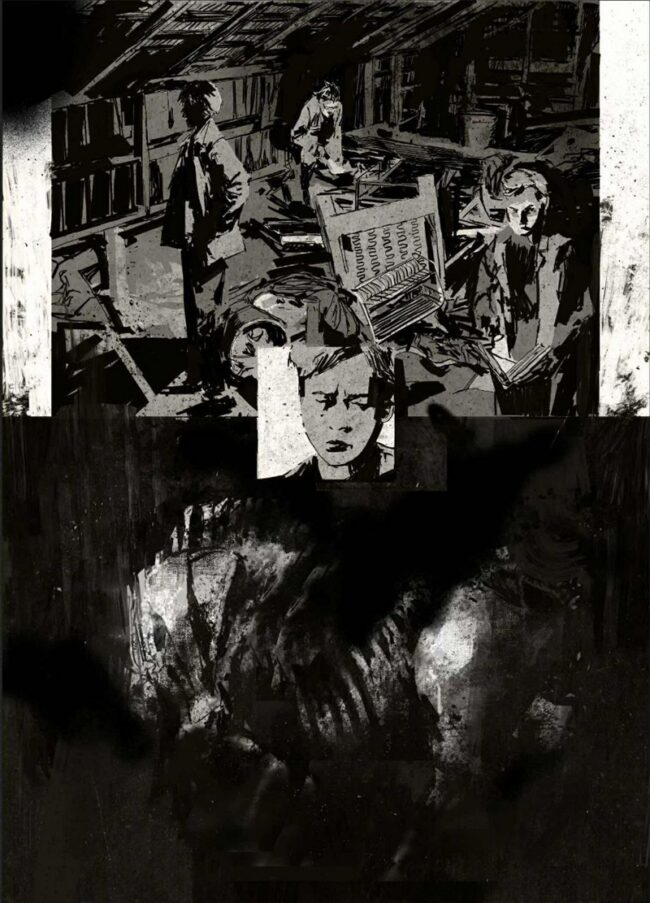
Graphic novel is the correct term for the book we are working on, as it will be about 160 pages long and its dark horror themes and imagery are surely not suitable for children. I wrote the script together with internationally known comic book artist Sami Makkonen, who is also responsible for the visual execution of the book. His artwork brings a raw, atmospheric quality that perfectly supports the bleak tone of the story. What readers can expect is not just violence or shock value, but a layered horror narrative. The story explores an Eastern Finnish death cult and its apostles, blending psychological horror, religious undertones, and elements of urban decay. The Finnish publishing house Like will release the book in autumn 2026.
Will there be an English version of it?
The book is currently written in Finnish, but we are actively planning an English edition. Given the universal nature of its themes – parenthood, addiction, faith, corruption, power, oss – we strongly believe it could resonate internationally, and we would absolutely welcome translations into other languages.
When did the idea to make a graphic novel that combines your hometown, the prayers and all those dark influences from mystic creatures come up?
Some of the core ideas behind the story date back more than a decade. At the time, I didn’t yet know what form they should take. I initially tried to channel them into music, but it didn’t work out well. After that, the ideas remained dormant for years. Things changed when I met Sami Makkonen about two years ago. We began discussing my early concepts, and it quickly became clear that the graphic novel format would be perfect for the ideas. Our collaboration turned motives into a cohesive narrative. During the same period, while working on the Orpokotijuhlat Saarella album, I revisited the book »Eräs meidän ajan profeetta«. Its distorted religious tone resonated strongly with the direction of our story. It helped shape the cultic elements, the language of belief, and the idea of faith transformed into something… disturbing, to say the least. From there, the world of the story grew organically.
How did you two work together?
We developed the characters gradually. To anchor the narrative historically, we conducted local archival research, including reading newspapers from 1992 in the Savonlinna library. This process helped us capture the atmosphere of the time. We see each other often, but we mostly work online. For example, I often search for reference images and send them to Sami while he’s drawing a new page. We’ve also worked on the script remotely using Google Docs. That said, some of our best ideas have come to us in the sauna and at the cemetery.
What is Makkonen’s art like? What elements (besides visuals) did he add?
Sami’s style is dark, painterly, and rooted in folklore and occult symbolism, as seen in his fully realized author-illustrator works »Hevosjumala« (»The Horse God«), »Sielujen kutoja (»The Weaver of Souls«), and his interpretation of the Finnish national epic »Kalevala«, which was also released in the USA and Russia. In this project, he is largely responsible for the characters’ visual design, and his influence brings a sense of majesty and cinematic depth to the story.
Did you draw inspiration from other graphic novels or similar art forms?
Yes. As a kid I read the Asterix and Donald Duck comics, later X-Men, Spider-Man, Batman, Katsuhiro Otomo’s Akira and eventually Alan Moore and Frank Miller. I’ve also read Finnish comics from artists like Marko Turunen, Ville Pirinen, and Kalervo Palsa. Of course, all of that has influenced me, but our book draws heavily from real events – creatively reshaped and combined – and from films like »Nosferatu«, »The Texas Chain Saw Massacre«, »The Witch«, »The Blair Witch Project«, »Alien«, and even newer ones like »The Vourdalak«. The Finnish true-crime magazine »Alibi« has also been an influence.
Are the record and book connected? Do you see the album as a soundtrack to the book, maybe?
This brings us to one of the key aspects of this project: The Orpokotijuhlat Saarella album is clearly in some ways from the same world as our book, but we have been working on an official soundtrack album specifically for the graphic novel. Interestingly, that project has evolved into something larger: it is shaping up to become a new Harju album – effectively a continuation of Paavoharju after the band’s dissolution. Anniina Saksa, Johannes Pitkänen, and Teemu Eerola are once again on board, joined by contributions from Joose Keskitalo and the legendary Ville Leinonen. The soundtrack will exist in three different formats: QR codes in the book that open scene-specific audio, a CD version, and a vinyl release. Svart Records will release the CD and vinyl. There will also be bonus material on the physical albums. As you might have already guessed, the album will be twisted and bleak, but not without humour. Dark ambient, distorted folk songs, cassette tape aesthetics, echoes from the 1990s, hauntology etc.
I can’t believe it! All the tears and sorrow over the end of Paavoharju in vain? It seems, there is a god after all. Or the hex bag worked better than expected.
It was the end of Paavoharju – and now it’s the beginning of Harju (without the baggage of the name). This project has truly been a dream come true for me. There is a god, Sawomet, and Neeriel is his archangel.