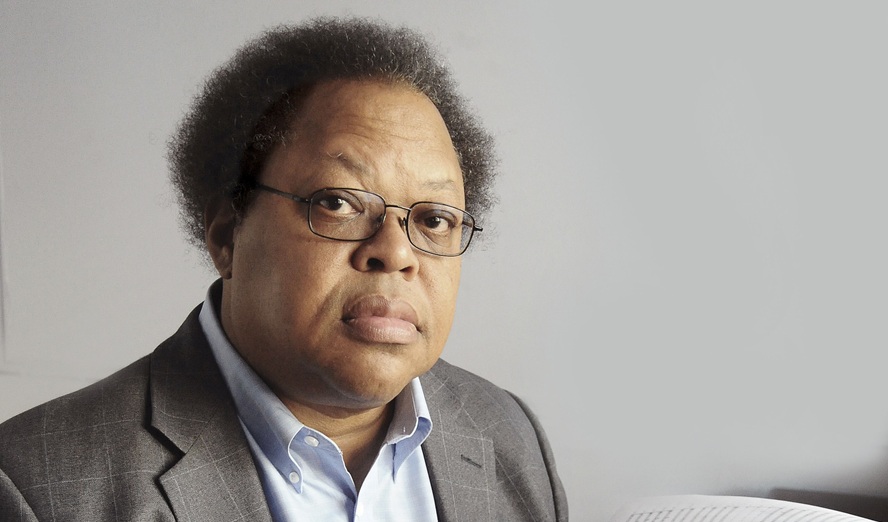
Anlässlich des 38. Wien Modern Festivals hatten wir die Möglichkeit, nicht nur mit Kurator Bernhard Günther, sondern auch mit dem diesjährigen Ko-Kurator und teilnehmenden Künstler George Lewis zu sprechen. Lewis ist Komponist, Professor an der Columbia University, Mitglied der Akademie der Künste Berlin, künstlerischer Leiter des International Contemporary Ensembles – und die Liste könnte noch viel länger sein. Das Interview über seine Komposition »Weathering« und seine Arbeit als Musiker führen wir auf Englisch.
skug: Dear George Lewis, your composition »Weathering« will open Wien Modern this year. In a composer’s note on the piece, you speak about a »Sisyphean cleft stick« in the struggle with discrimination. How is it possible to turn this endless and exhausting repetition of the same old game into something productive – into music?
George Lewis: Well, Louis Andriessen, John Coltrane, and Bernhard Lang have done wonderful things with repetition. In fact, most music on our planet makes use of repetition. But »Weathering«, with its constant and unpredictable invocation of a thick, heavy sonority that I call the »Not this again!« chord, compares particular forms of stress caused by what the writer bell hooks called »white supremacist capitalist patriarchy« to one of ancient Greek culture’s most terrifying myths: the fate of King Sisyphus, whom the gods punish by compelling him to push an enormous boulder up a hill, only to see it roll down again – a task he was doomed to repeat endlessly, throughout eternity.
Vimbayi Kaziboni conducted your composition in 2023 at its premiere in New York. Since 2024, Kaziboni has been conductor-in-residence at Klangforum Wien. Is it a coincidence that you two are meeting again in Vienna for »Weathering«?
In fact, I work with Vimbayi Kaziboni a great deal. He premiered »Weathering« with the American Composers Orchestra, as well as my »Disputatio‹« with Klangforum Wien. Like Ilan Volkov, Maestro Kaziboni totally gets where I’m at. He and Bernhard Günther co-curated this concert.
Your home instrument is the trombone, but you are also invested in computational music, which pretty much loses the boundaries of instrumentation and composition. Are you happy to come back to the trombone occasionally, or do you feel like the narrow boundaries of a conventional instrument are restrictive for composing and making music?
Many composers have a »home instrument«, and someone like the late and greatly missed Frederic Rzewski was a master composer as well as one of the greatest pianists of his generation. Frederic was also a great improvisor, and I learned a great deal from performing with him and many others. The lessons I learned influenced my work with generative-interactive AI, working with computers to understand what people do in improvisation. However, my ongoing interest in AI is in creating improvisors, not improvisations or compositions. But I don’t plan to return to trombone performance anytime soon. I already have a lot of other things to do.
The first of your recordings I listened to was »Endless Shout« (2000). I remember sampled spoken words on the first track of this recording. As a person who grew up with pop music, I immediately thought of A Tribe Called Quest and even Run-D.M.C. Does hip-hop play a role in your musical creation?
The program note to »Weathering« mentions the JID song »Kody Blue 31«, which is actually quoted in the piece as a source of hope against despair. But my engagement with hip-hop dates back to my 1996 piece for percussion and fixed media, » written for Steven Schick with text by Quincy Troupe. There are two »rappers« in »North Star Boogaloo«: the percussionist, whose part is completely notated, and »Virtual Quincy«, a computer program I wrote that delivered sampled segments of Quincy’s voice reading the poem, along with heavy hip-hop beats and other samples, all keyed to points in the score. Somehow, thirty years on, young percussionists continue to perform this piece, perhaps because it’s one of just a few works of contemporary music that incorporates hip-hop.
With comparisons like Run-D.M.C., I am very much in the pop niche of hip-hop. What do you think about the intersection of the popular and the avantgarde? Is pop a simplification of what once was avantgarde, or is there more of a reciprocity between the two?
Genres (pop, avant-garde, etc.) don’t exercise reciprocity – creative artists do. For the rest, I don’t think I need to take a position on any of that. People should make whatever kind of music they want – I certainly do. But music’s obsession with genre is an unhealthy addiction, and, like many other forms of addiction, this genre addiction can actually kill you, at least creatively.
On November 22 your composition »Melodies for Miles« (2022) will be performed by the International Contemporary Ensemble together with master’s students from the Webern Ensemble. The Ensemble consists of students from the University of Music and Performing Arts Vienna. How important is collaboration with students and your academic work for your own musical output?
I come from the Association for the Advancement of Creative Musicians (AACM), which started a free school in 1968 that still exists today. In the early 1970s I took composition lessons from Muhal Richard Abrams in this school and later taught there as well. Muhal felt that we needed to rid ourselves of the idea that there was some unbridgeable hierarchy between so-called teachers and so-called students. So this became part of my pedagogical philosophy. The so-called students are really our colleagues, and collaboration is fundamental to the project of creating new music.
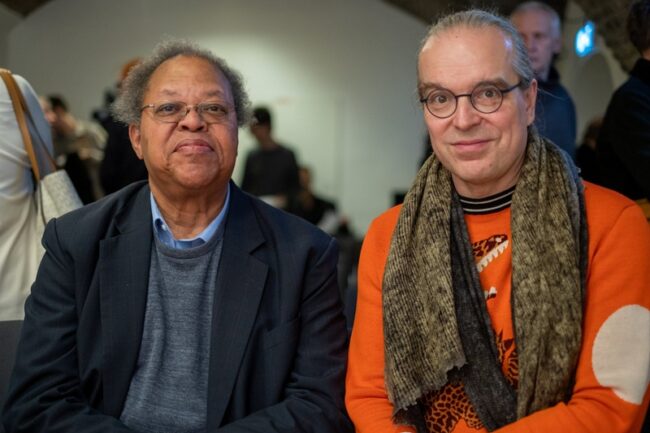
Die Komposition »Melodies for Miles« (2022) wird am 22. November 2025 im Joseph-Haydn-Saal der Universität für Musik und Darstellende Kunst zu hören sein. Das Wien-Modern-Programm mit dem Titel »Composing While Black« hat George Lewis kuratiert und beginnt um 17:00 Uhr. Neben Lewis’ Komposition werden u. a. Arbeiten von Nyokabi Kariũki und Anthony Braxton aufgeführt. Der Eintritt ist frei, wer interessiert ist, sollte sich allerdings vorher anmelden.